
PPS voting to close schools - Final Rally and Public Meeting
5 p.m. Tuesday May 26th
Rally with us outside the PPS admin building in Oakland. Bring your children, bring signs, and bring your concerns. Your voice matters!
This is our final chance to speak up before the Board votes on closing 9 schools and displacing 6,000+ students.
FREQUENTLY ASKED QUESTIONS
“Wait, what are all these changes??”
SUMMARY OF CHANGES→
“How do I speak at the public meeting?”
HOW TO SIGN UP→
“What if I can’t be there on Tuesday?”
Email the Board. Bonus: Make a video of your child sharing why they want their school to stay open, and include it in your email.
EMAIL BOARD DIRECTORS→
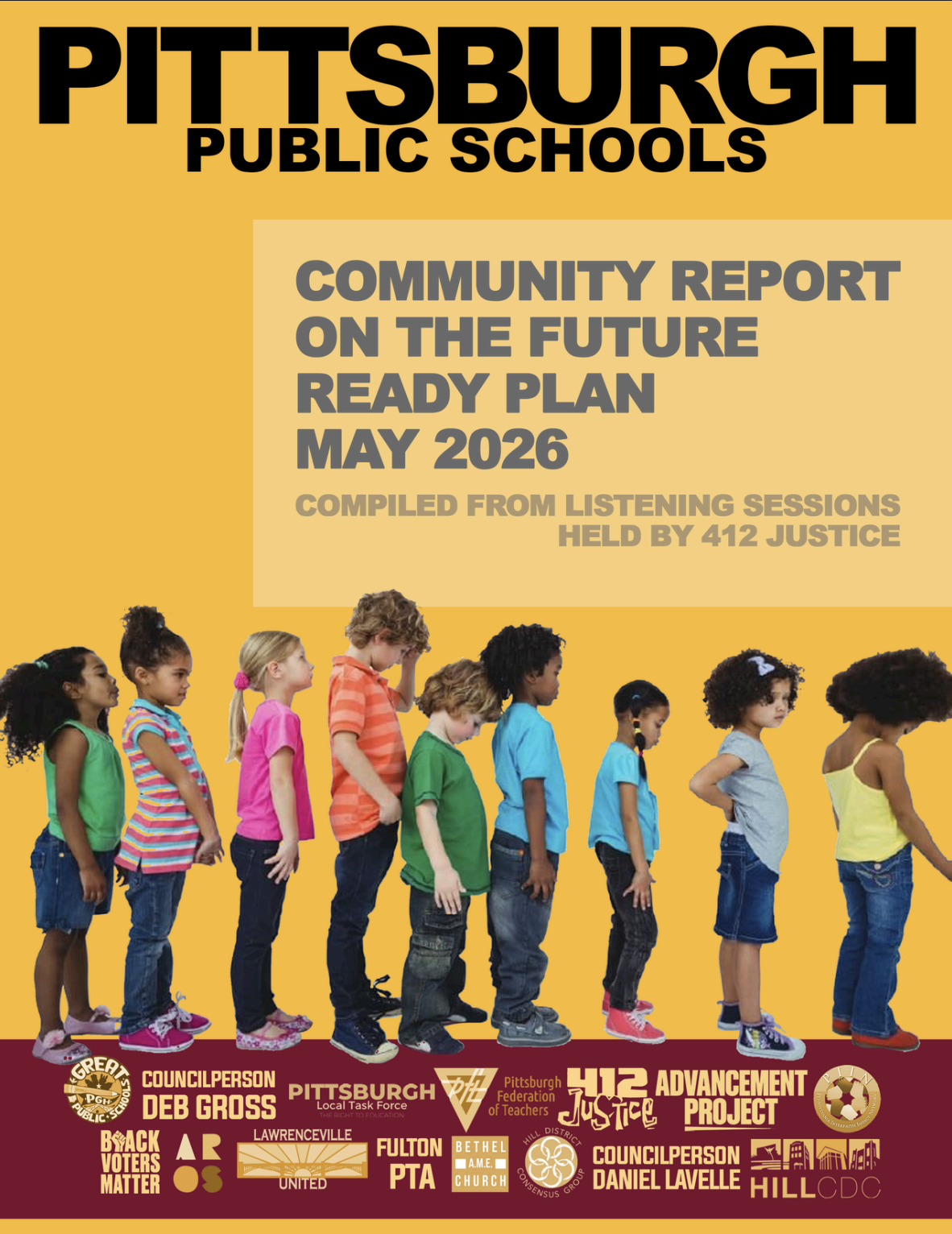
“What are people in the community saying?”
Check out the Community Report on the PPS Future-Ready Plan!
It was published May 2026 based on a series of listening sessions organized by 412 Justice and Education Rights Network.
📣 VOTE NO — SAVE OUR SCHOOLS
The Board already rejected this plan in November 2025 — and nothing has changed.
Same school closures and consolidations
Same unanswered questions
Same missing details
Same risks to students
Same lack of accountability
Same disproportionate harm to historically underserved students
If this plan was not good enough then, there are #NoExcuses to approve it now.
#NoExcuses
for closing schools and uprooting 6,000+ students without a real plan
for overcrowded schools and classrooms
for destabilizing students with no guaranteed benefits
for removing Community Schools supports from 1,300+ students
for repeating past mistakes
for ignoring community voices
for harming students with disabilities
The public hearing process failed families
Three of the nine Board members voting on this plan were not even in office when the legally required public hearings were held.
Those hearings happened during the summer, when families are least engaged, and only 91 speakers participated across all nine school closure hearings.
That is not meaningful public engagement for a plan that permanently closes neighborhood schools and impacts thousands of students and families.
“Quarterly updates” are NOT accountability
The proposed amendment requiring quarterly updates from the Superintendent is not real accountability.
There are still:
No measurable student outcome goals
No benchmarks for promised programs and services
No measurable standards for overcrowding or facility conditions
No equity analysis on the impact to historically underserved students
No consequences if students are harmed
PPS’s own history shows that school closures can lead to:
Lower attendance
Academic declines
Increased suspensions
Enrollment loss to charter and private schools
The Superintendent has still not shown the public:
what programs schools have now
what inequities exist now
or how this plan measurably improves student access and outcomes
The Superintendent must be accountable for actual student outcomes, not just quarterly presentations.
Major community concerns are still being ignored
Allegheny @ King Elementary is projected to have 809 students. Students from 4 small schools must move there. For example, students from Manchester will move from a school of 129 students to one more than six times larger.
Instead of addressing concerns about overcrowding and student transitions, the district brought the media into Manchester to highlight empty classrooms.
At the same time, more than 1,300 students have to leave a building that has Community Schools and move to a building that does not. Will the services that the students are getting through Community Schools be provided at their new school?
The Superintendent continues to refuse to acknowledge this loss and answer this question.
With fewer bus routes, many more students will walk long distances to school crossing dangerous intersections.
PPS hasn’t even asked the City if they have the extra crossing guards needed to get students safely to school.
“Trust us” is NOT a plan
Board President Gene Walker said:
“Sometimes you don’t build trust through the planning, you build trust through implementation.”
And:
“The proof will be in the execution.”
But trust is built BEFORE disruption happens, not after.
You do not build trust by:
closing schools first
moving 6,000+ students first
cutting staff first
and hoping implementation works later
Families have spent two years asking for transparency, details, and accountability.
They still do not have them.
Bottom line
Same plan.
Same risks.
Same unanswered questions.
No equity.
No accountability.
The responsible vote is still NO. #NoExcuses